
After more than 10 years working in the supplement industry, I’ve become wary of products that promise sharper thinking, endless motivation, and instant mental clarity all at once. Most formulas do not live up to the label. That is part of why I paid attention to Nooceptin when people first started asking me about it. In my experience, the products worth discussing are usually not the ones making the loudest claims. They are the ones people describe in more grounded terms: better focus during long work blocks, less mental drag in the afternoon, and a smoother sense of concentration rather than a jolt.
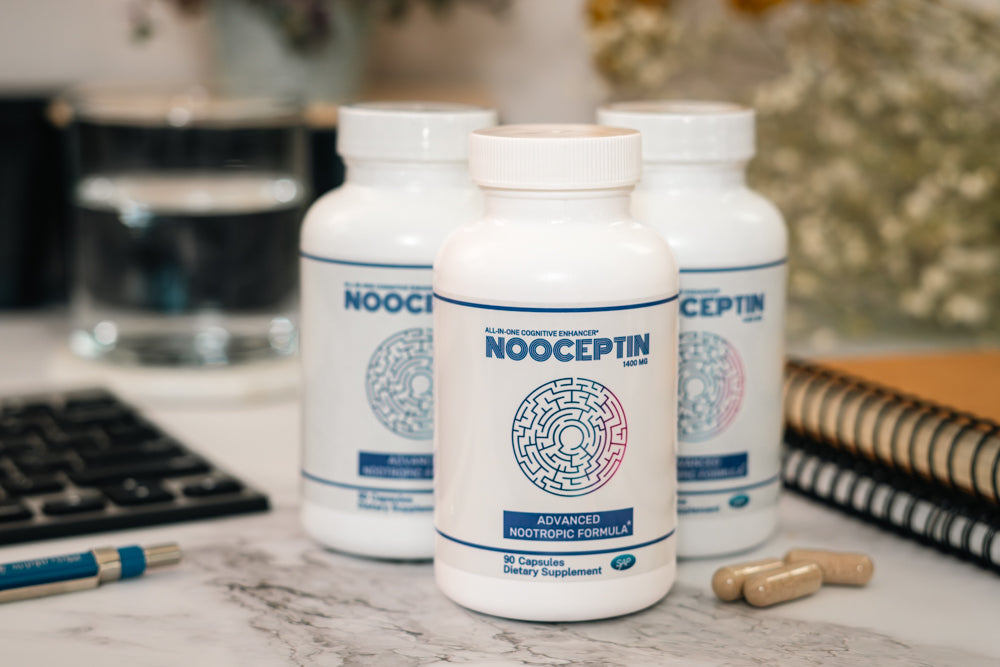
What I’ve found over the years is that most people approach nootropics the wrong way. They expect to feel transformed within an hour, and if that does not happen, they write the product off. That mindset leads to a lot of disappointment. A customer I spoke with last spring had already burned through several flashy brain supplements before trying a more balanced formula. His complaint was always the same: he would feel stimulated for a short stretch, then mentally scattered later in the day. What he wanted was not more buzz. He wanted consistency. That is the real test for a product like Nooceptin. Can it help someone stay mentally steady through actual work, not just feel something for a little while?
That distinction matters more than most buyers realize. In a retail setting, I’ve had plenty of conversations with people who could not tell the difference between stimulation and focus. One woman preparing for a licensing exam came in convinced she needed the strongest formula on the shelf. After talking with her for a while, it was clear she was already overloaded on caffeine and sleeping poorly. I advised her to stop chasing that “amped up” feeling and pay more attention to whether a product helped her sit with the material, retain information, and avoid that washed-out crash later in the evening. That is how I think products like Nooceptin should be judged.
My opinion is simple: I would rather see a nootropic formula aim for steadier cognitive support than try to overwhelm the user with stimulants. The people who seem happiest with these products are not usually the ones expecting fireworks. They are the ones who notice they can get through a demanding morning, hold their train of thought better, or recover from the usual mental slump without grabbing another coffee. I’ve heard versions of that from enough customers over the years that I take it seriously.
I also advise people not to make the common mistake of stacking too many products at once. I’ve seen buyers combine a nootropic formula with pre-workout, extra caffeine, and other random capsules, then blame the main product when they feel restless or off. That is not a fair test. A formula like Nooceptin makes more sense when used cleanly and evaluated honestly over time.
From where I stand, the value of a nootropic product is not whether it sounds impressive. It is whether it helps real people think more clearly through real responsibilities. That is the standard I keep coming back to, and it is the only one that has held up after years in this business.